The gateway is what links our local D-STAR repeater to the rest of the world, in addition to providing several local services such as simulcasting on all three DV modules, an "Echo Test", link status and a variety of gateway telemetry and information.
For your traffic to be heard over the D-STAR network and to make use of the gateway features, program your radio with WA6IRC_G for RPT2 Call, and set RPT1 Call to the local module you use to access the D-STAR system. The URCALL parameter is used to select the various gateway features. To make life easy, program memories for each reflector / gateway / feature you wish to use. For details on programming your radio, see our Radio Setup page.
As D-STAR has matured, certain features have shown themselves to be more popular than others, primarily due to their ease of use. We present them here.
Currently there are more than 40 reflectors worldwide. They have become so popular that many D-STAR gateways remain linked to certain reflectors on a permanent or semi-permanent basis, making QSOs over a wide area very easy for the user. One example is Reflector 1 C, with upwards of 50 systems linked at any one time, WA6IRC B being one of them. Locally, many California 1.2GHz D-STAR systems are linked to Reflector 14 A, among them WA6IRC A. For a listing of reflector locations, usage and current status see the Georgia D-STAR Reflector Listing.
For reflector (and gateway) linking, program your radio with Link memories for the links you wish to make, a QSO memory (URCALL set to CQCQCQ) for the QSO, and an Unlink memory (URCALL set to 7 spaces followed by U) to drop the link when you are done.
To establish the link, select your Link memory, key up and give your callsign. The repeater will reply with a "Remote System Linked" message. Switch to your QSO memory and carry out your QSO. When you are ready to drop the link, key up on your Unlink memory. The repeater will reply with an unlink message.
Only one link can be made from each local module at a time. Do not link multiple local modules to the same remote module.
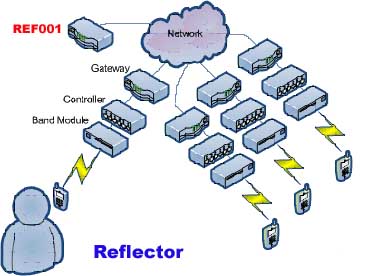 |
URCALL: REF012AL RPT1 Call: WA6IRC_C RPT2 Call: WA6IRC_G SWITCH TO:URCALL: CQCQCQ RPT1 Call: WA6IRC_C RPT2 Call: WA6IRC_GFOR QSO TO DROP LINK:URCALL: _ _ _ _ _ _ _ U RPT1 Call: WA6IRC_C RPT2 Call: WA6IRC_G |
To establish the link, select your Link memory, key up and give your callsign. The repeater will reply with a "Remote System Linked" message. Switch to your QSO memory and carry out your QSO. When you are ready to drop the link, key up on your Unlink memory. The repeater will reply with an unlink message.
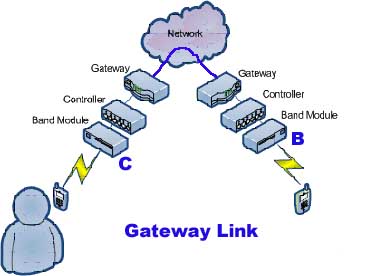 |
URCALL: W6HRO_BL RPT1 Call: WA6IRC_C RPT2 Call: WA6IRC_G SWITCH TO:URCALL: CQCQCQ RPT1 Call: WA6IRC_C RPT2 Call: WA6IRC_GFOR QSO TO DROP LINK:URCALL: _ _ _ _ _ _ _ U RPT1 Call: WA6IRC_C RPT2 Call: WA6IRC_G |
The gateway also broadcasts voice and text messages on linked modules approximately every 10 minutes to indicate gateway link status for that module. The text message will scroll across your radio display as "Linked to REF001 C".
Now here is the challenging part: there are two ways callsign routing is handled. For simplicity we will call them ICOM and ircDDB. ICOM's method works, but updates do not propagate through the network very quickly. ircDDB works much faster; no surprise since it was developed to handle routing quickly.
What this means for us is that if you use callsign routing on a gateway running ircDDB, and the party you are calling is also on a gateway running ircDDB, chances are very good you will hear each other and be able to carry on a QSO, even if you move between ircDDB-enabled gateways. On gateways running the ICOM method you may not be satisfied with the results, especially if moving between gateways. For a current list of ircDDB gateways in the USA, see the ircDDB Network Status Page for US Gateways.
You can skip this part… ircDDB callsign routing is handled through the ircDDB-Network of distributed servers which exchange callsign routing info using Internet Relay Chat (IRC) technology. It is a pretty quick and efficient method. While ICOM's method works, it doesn't update quite fast enough to deal with mobile or portable operations.
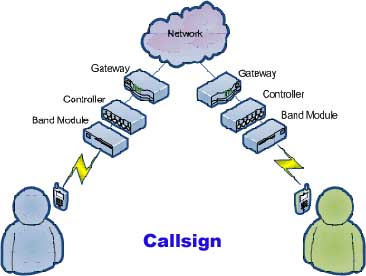 |
URCALL: KC1RON RPT1 Call: WA6IRC_C RPT2 Call: WA6IRC_G |
VIS ON: "Visibility On". In this mode, detailed information about your transmissions (e.g. time, length and TX message) is shown in the "Live Log" and in the "Last Heard" list. "VIS ON" is activated by placing VIS _ _ _ON in the URCALL field, then keying up on an ircDDB-enabled D-STAR repeater. This sets the visibility toggle for your callsign to "ON". You can now change URCALL back to CQCQCQ. Check the "Live Log" web page at http://ircddb.net/live.htm for your callsign. This only needs to be done once to set the toggle.
VIS OFF: "Visibility Off". In this mode no information about transmissions is shown in the "Live Log" and the "LastHeard" list. "VIS OFF" is activated by placing VIS _ _ OFF in the URCALL field, then keying up on an ircDDB-enabled D-STAR repeater. This sets the visibility toggle for your callsign to "OFF". You can now change URCALL back to CQCQCQ. Check the "Live Log" web page at http://ircddb.net/live.htm. Your call sign should not appear any longer from now on if you press PTT. This only needs to be done once to set the toggle.
|
Toggle Visibility ON
|
Toggle Visibility OFF
|
|
|
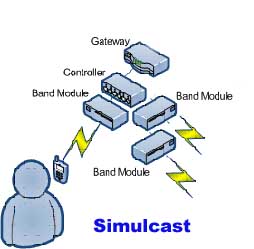 |
URCALL: WA6IRC _ _ RPT1 Call: WA6IRC_C RPT2 Call: WA6IRC_G |
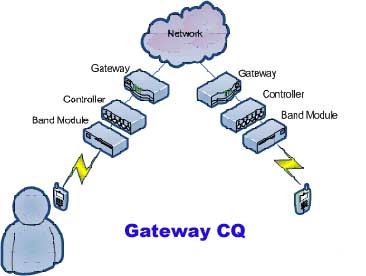 |
URCALL: /W6HRO_B RPT1 Call: WA6IRC_C RPT2 Call: WA6IRC_G |
The WA6IRC Gateway supports the following "scripts", programs that run on the gateway in response to setting URCALL to the gateway callsign followed by one of the script designators shown below. These programs do a variety of things such as linking to the last busy reflector, or to a random reflector, or send text messages to your D-STAR radio. Most gateways support these scripts.
Our gateway runs a unique script, _ _ _ _ _ _ EX (6 spaces before EX), which queries the US Geological Survey and returns a list of recent California earthquakes as a text message on your radio. The most recent quake from the past hour is listed first, in the format of magnitude and general location, i.e. 1.3 NORCAL 2.7 SOCAL 3.8 CENCAL. A great way to find out if that was an earthquake, or just Aunt Bunny jumping around.
Just to name a few, you can check for recent activity, link to a random reflector, or the last busy reflector... a great way to find a QSO. Some scripts may really only appeal to your inner technogeek, such as "server uptime", but hey, marginally useful apps are what make life, and D-STAR, interesting.
Set the last two characters of URCALL as shown in the table below to run the listed script.
URCALL |
SCRIPT DESCRIPTION |
AX |
Reports last local RF user. "A" for Activity. |
CX |
Checks registration status and location last heard. "C" for Check. |
EX |
Earthquakes in California in the past hour. Magnitude and general location, most recent quake listed first. "E" for Earthquake. |
HX |
Gateway server temperatures. "H" for Heat. |
IX |
Link status information: Voice and text message. "I" for Info. |
KX |
Unlink all links. "K" for Kill. |
LX |
Link to last busy reflector. Great way to find a QSO. "L" for Link. |
RX |
Random reflector link. Great way to meet someone new. "R" for Random. |
TX |
Returns current time in Los Angeles, CA. Who needs a watch with D-STAR? "T" for Time. |
UX |
Returns gateway server uptime and CPU load. Impress your friends. "U" for Uptime. |
| CALL TYPE |
URCALL |
RPT1 CALL |
RPT2 CALL |
DESCRIPTION |
| SIMULCAST |
WA6IRC _ _ |
WA6IRC_C |
WA6IRC_G |
Transmit on all 3 local DV ports |
| CALLSIGN |
KC1RON |
WA6IRC_C |
WA6IRC_G |
Route call to last location KC1RON was heard |
| REFLECTOR LINK START |
REF001CL |
WA6IRC_C |
WA6IRC_G |
Start link to C module on REF001 |
| GATEWAY QSO |
CQCQCQ |
WA6IRC_C |
WA6IRC_G |
Sends DV traffic to remote Gateway or Reflector |
| UNLINK |
_ _ _ _ _ _ _ U |
WA6IRC_C |
WA6IRC_G |
Drop the Gateway or Reflector link |
| LOCAL RF ACTIVITY |
_ _ _ _ _ _ _ A |
WA6IRC_C |
WA6IRC_G |
Last local RF user
via text message |
| GATEWAY LINK STATUS |
_ _ _ _ _ _ IX |
WA6IRC_C |
WA6IRC_G |
Plays audio files describing
current link configuration |
| LINK TO BUSY REFLECTOR |
_ _ _ _ _ _ LX |
WA6IRC_C |
WA6IRC_G |
Link to last busy reflector.
Easy way to find a QSO |
| RANDOM REFLECTOR LINK |
_ _ _ _ _ _ RX |
WA6IRC_C |
WA6IRC_G |
Random link to
a recently active reflector. |
| ECHO TEST |
_ _ _ _ _ _ _ E |
WA6IRC_C |
WA6IRC_G |
Plays back your transmission |
| REPEATER ID |
_ _ _ _ _ _ _ I |
WA6IRC_C |
WA6IRC_G |
Repeater ID if unlinked;
"System Linked" message if linked |